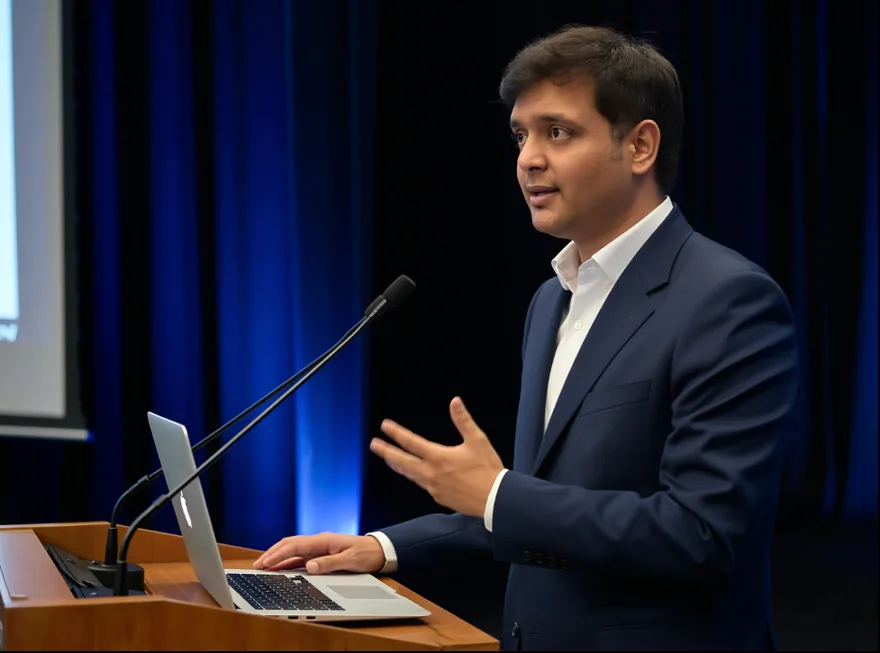
Nobody calls these software problems. I've spent my career learning that they usually are. Somewhere between airlines, logistics, healthcare, and the workforce systems behind hospitality, I landed on two convictions I can't shake: architecture is employee experience, and great systems only come from teams that trust each other. So I build both. Platforms that absorb complexity before it reaches a human, and engineers who grow into leaders.
Your top performer might just have the best shift.
Most recognition platforms measure scheduling luck and call it merit. Fairness has to be modeled: actual performance separated from opportunity to perform. I wrote about the data model this requires.
02
Every legacy system has a shadow org chart of workarounds.
Legacy isn't just technical debt. It's human debt: the side spreadsheets and tribal knowledge people build around old systems. Modernize without understanding those behaviors and you ship the same friction in a newer interface.
03
Friction never disappears. It just picks a different victim.
When enterprise software is fragmented, the pressure moves to managers and frontline staff. I judge architecture by how much complexity it absorbs before a user ever sees a screen.
Try it: absorb the friction
Amber marks friction flowing toward a frontline human. Flip the architecture on, or press and drag (or swipe) to absorb particles yourself.
Complexity absorbed: 0
Reached a human: 0
02 // Research & editorial
Peer-reviewed work on what changes when the component you're shipping is probabilistic, and the editorial boards where I review other people's answers to the same question.
I'm Director of Engineering at Unifocus, where I own the Workforce Performance product line: planning and scheduling, time and attendance, budgeting, and the integrations that connect them to the systems hotels already run. Before this I built for airline travel platforms, logistics, and healthcare, environments where downtime is a grounded flight or a delayed patient, not a ticket. I lead global teams across the US and India, I'm accountable for uptime, client success, and budget, and I measure myself as much by the leaders my teams produce as by what we ship. I also serve as Associate Editor at the Global Business & Economics Journal and the Hampton Global Business Review, where I cover enterprise SaaS architecture, technology governance, and AI-driven operations.
0+
Years in enterprise software
0
Industries built for
0
Global team hubs
0
Editorial boards
Bio for event organizers
Anil Kumar Karumuru is Director of Engineering at Unifocus, where he leads workforce performance platforms for the hospitality industry. His nearly two decades in enterprise software span airline technology, logistics, healthcare innovation, and workforce management. He serves as Associate Editor at the Global Business & Economics Journal and the Hampton Global Business Review, and his research on trustworthy AI engineering and prompt-injection resilience appears in both. He writes about modernization, integration architecture, and fairness in workforce systems, with work appearing in Success Quarterly, HackerNoon, and Medium.
05 // Contact
Building something in workforce tech, or want to compare notes on modernization?